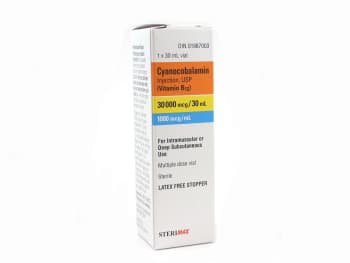
Vitamin B12 is key to nerve health
Scientific Communications: biomarkers 06.00 - NOVEL TARGET/ EXPERIMENTAL FIDINGS TO CLINICAL TRANSLATION - 06.02 - GENETICS, OMICS AND BIOMARKERS O - ESOC25-1221 NOVEL EPIGENETIC INSIGHTS INTO CEREBRAL SMALL VESSEL DISEASE: AN EWAS OF EXTREME-cSVD UNSING METHYL-C SEQUENCING Ilana Caro 1 , Aniket Mishra 1 , Bing Ge 2 , Nicola Armstrong 3 , Qiong Yang 4,5 , Andrew Simpkin 6 , Karen Mather 7 , Sudha Seshadri 5,8 , Hans Grabe 9 , Elin Grundberg 10,11 , Tomi Pastinen 10,11 , Mark Lathrop 2 , Stphanie Debette 1 1 Bordeaux Population Health research center - Universit de Bordeaux, Bordeaux, France, 2 Victor Phillip Dahdaleh Institute of Genomic Medicine, McGill University, Montral, Canada, 3 Department of Mathematics and Statistics, Curtin University, Perth, Australia, 4 Department of Biostatistics, Boston University School of Public Health, Boston, United States, 5 The Framingham Heart Study, Framingham, United States, 6 School of Mathematical and Statistical Sciences, National University of Ireland, Galway, Ireland, 7 Centre for Healthy Brain Ageing (CHeBA), Discipline of Psychiatry and Mental Health, School of Clinical Medicine, University of New South Wales, Sydney, Australia, 8 Glenn Biggs Institute for Alzheimer's and Neurodegenerative Diseases, University of Texas Health Sciences Center, San Antonio, United States, 9 Department of Psychiatry and Psychotherapy, University Medicine Greifswald, Greifswald, Germany, 10 Genomic Medicine Center, Department of Pediatrics, Children's Mercy Kansas City, Kansas, United States, 11 UKMC School of Medicine, University of Missouri Kansas City, Kansas City, United States Background and Aims: Cerebral small vessel disease (cSVD) is a leading cause of stroke and dementia, yet no specific mechanism-based treatment to date is available and its underlying molecular mechanisms remain poorly understood
Trabecular bone microarchitecture, bone mineral density, and vertebral fractures in male osteoporosis
Unlike systemic IGF-1, MGF is produced locally in muscle tissue in response to stress
Key Factors That Shape Individual GHK-Cu Response Variability Response to GHK-Cu varies significantly between individuals
Widely investigated in regenerative medicine, sports medicine, and tissue engineering , these peptides have demonstrated potent wound-healing and anti-inflammatory properties in preclinical studies